
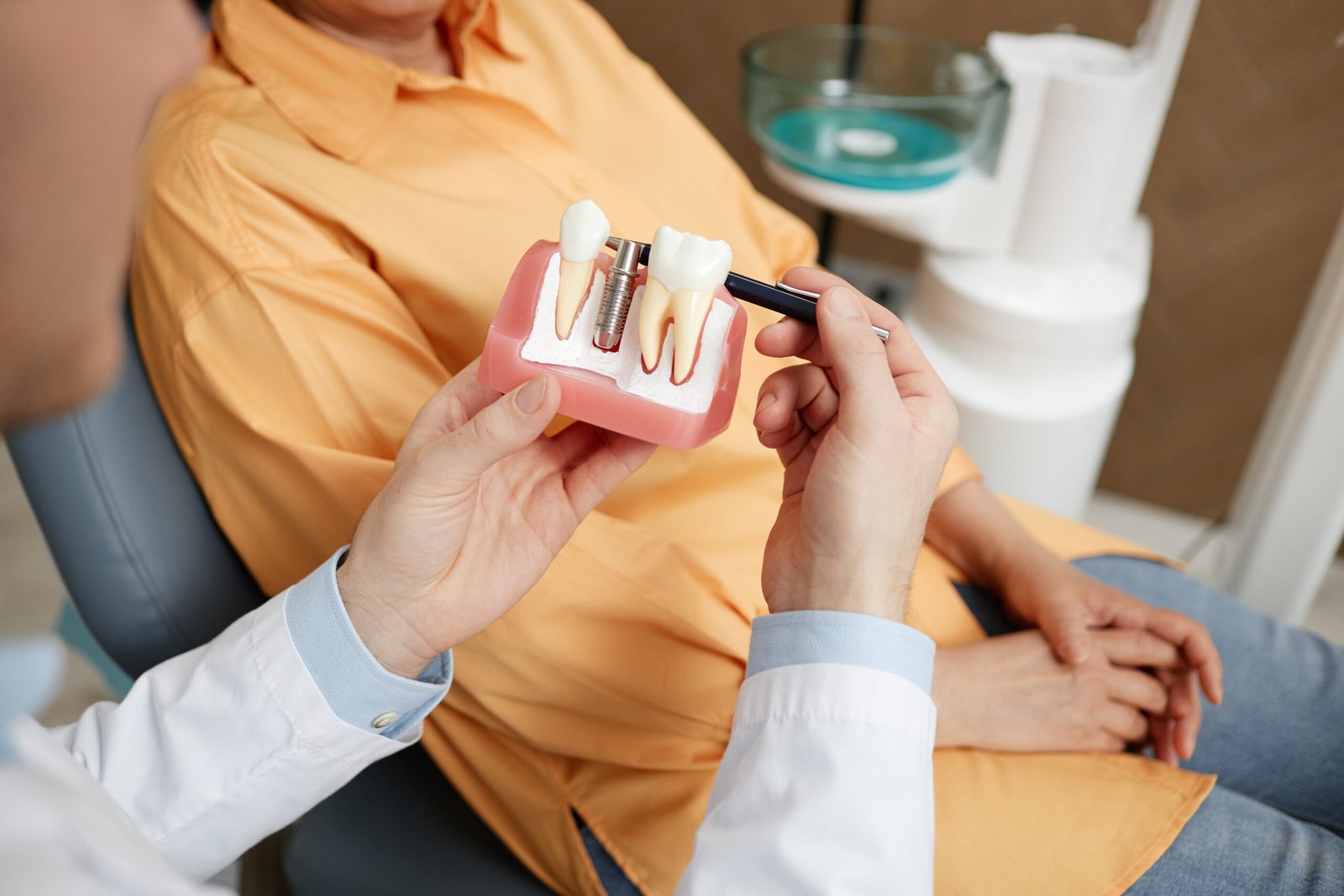
Dental implant complications are not always obvious from the beginning. Some problems develop gradually and may initially cause only mild discomfort, tenderness, bleeding around the gums or a subtle change when chewing. Others can appear soon after implant placement and require prompt evaluation to determine whether healing is progressing as expected.
Dental implants are designed to function as stable replacements for missing teeth. However, they involve several components and depend on healthy surrounding bone and soft tissues. Therefore, a problem may involve the implant itself, the crown, the abutment, the supporting bone or the tissues around it.
One symptom that deserves particular attention is mobility. If you notice an implant that is moving, the cause should be investigated rather than assuming that the entire implant has failed. Sometimes the movement comes from the crown or another prosthetic component, while in other cases the underlying implant may be affected.
Recognising the early signs of dental implant complications can help you seek professional assessment before a problem progresses.
What Are Dental Implant Complications?
The term dental implant complications covers a range of biological, mechanical and prosthetic problems. They can occur during the healing period, after the final crown has been fitted or even years after treatment.
Biological complications primarily involve the tissues surrounding the implant. Inflammation, bacterial plaque accumulation and changes in the supporting bone can affect peri-implant health. Mechanical problems, on the other hand, may involve the crown, abutment or connecting screw.
This distinction matters because two people may describe a similar symptom while experiencing completely different problems. For example, discomfort during chewing could result from inflammation around the implant, excessive loading or an issue with the prosthetic restoration.
For this reason, symptoms should be assessed in context rather than interpreted individually.
Which Symptoms Should You Pay Attention To?
Not every unusual sensation indicates a serious problem. Mild tenderness can be expected during the initial healing period, particularly after a surgical procedure. What matters is how symptoms develop over time.
Signs that deserve attention include:
- persistent or increasing pain, swelling or tenderness around the implant;
- bleeding, discharge, an unpleasant taste or noticeable mobility;
- discomfort when biting or chewing;
- gum changes around the restoration;
- a crown that suddenly feels different, loose or unstable.
A symptom that becomes progressively worse is generally more concerning than discomfort that steadily improves during normal healing.
The timing also provides useful information. Symptoms appearing shortly after surgery need to be interpreted differently from new pain or swelling around an implant that has functioned normally for several years.
Dental Implant Complications During the Healing Period
The first weeks and months after implant placement are important because the implant must establish a stable relationship with the surrounding bone. This biological process is known as osseointegration. During this period, bone forms a close structural connection with the implant surface, creating the foundation needed to support the final restoration.
Healing is not identical for every patient. The clinical situation, bone and gum health, implant location and treatment plan can influence the process. This is why postoperative follow-up remains important even when recovery appears uncomplicated.
Some discomfort and swelling can occur after surgery. These symptoms would normally be expected to improve rather than intensify. Persistent or worsening symptoms need assessment because they may indicate that healing is not progressing as planned.
The broader category of dental implant complications during this stage can include infection, problems with early stability or failure of the implant to integrate adequately with the surrounding bone. These possibilities cannot be distinguished reliably from symptoms alone, so clinical examination is important when recovery does not follow the expected pattern.
Is Pain Always a Sign That Something Is Wrong?
No. Pain must always be interpreted according to its intensity, duration and timing.
Short-term postoperative discomfort is different from pain that begins unexpectedly months or years later. Similarly, mild sensitivity that gradually decreases is different from pain that becomes stronger or appears specifically during biting.
Patients searching for information about dental implants pain are often trying to understand this distinction. Pain is a symptom rather than a diagnosis. Its source may be the tissues surrounding the implant, a mechanical issue with the restoration or even another tooth in the same area.
This last point is particularly important. A nearby natural tooth can develop decay, pulpal inflammation or another dental problem independently of the implant. Therefore, the location where pain is perceived does not always identify its actual source.
A toothache that persists also deserves dental evaluation rather than being automatically attributed to a nearby implant. A careful examination can help distinguish pain originating from a natural tooth from symptoms associated with the implant-supported restoration.
What Happens When the Tissues Around an Implant Become Inflamed?
One of the most important biological problems involves inflammation of the tissues surrounding an implant.
According to the American Academy of Periodontology, peri-implant diseases are inflammatory conditions affecting the soft and, in more advanced situations, hard tissues around dental implants. Bacterial accumulation can irritate the surrounding gums and contribute to progressive tissue damage if the condition is not addressed.
Two conditions are particularly relevant: peri-implant mucositis and peri-implantitis.
Peri-implant mucositis affects the soft tissues without evidence of supporting bone loss. Peri-implantitis involves inflammation together with deterioration of the bone supporting the implant. The distinction is clinically important because treatment needs can differ considerably.
Possible warning signs include redness, tenderness and bleeding around the implant. However, significant peri-implant disease does not necessarily begin with severe pain. This is one reason routine dental follow-up remains important even when an implant feels comfortable.
Dental Implant Complications Can Be Mechanical Too
Not every complication means that the implant has lost its connection with the bone. An implant-supported tooth consists of more than the fixture positioned in the jaw.
Depending on the restoration, there may also be an abutment, connecting screw and crown. A problem affecting one of these components can change the way the restoration feels without necessarily indicating failure of the implant itself.
For example, a screw may loosen or the crown may become unstable. Excessive forces during chewing or teeth grinding may also place additional stress on the prosthetic components.
This is why apparent movement requires careful examination. A dentist needs to determine what the implant is actually moving before deciding how the problem should be managed.
Understanding the different stages and components involved in Dental Implant Procedures can also make this distinction clearer. The American Academy of Periodontology explains that dental implant treatment may involve different restorative approaches and requires ongoing oral care and professional follow-up after placement.
Why Early Changes Should Not Be Ignored
A dental implant can continue to feel functional even while changes are developing around it. Pain is therefore not the only sign worth monitoring.
Bleeding during brushing, recurrent swelling, tenderness, an unusual taste or a change in the way the crown feels can all provide useful information. None of these findings alone confirms a specific diagnosis. However, persistent or progressive changes justify professional assessment.
Regular monitoring is particularly relevant because healthy gums and supporting bone contribute to the long-term stability of implant treatment. Daily plaque control also remains necessary. Dental implants do not develop tooth decay in the same way as natural teeth, but the tissues surrounding them can still become inflamed.
Recognising dental implant complications early is therefore not about assuming the worst whenever a symptom appears. It is about noticing changes, considering how they evolve and having persistent or unusual symptoms properly evaluated.
Can an Implant Hurt When You Bite or Chew?
Pain that appears mainly during chewing can provide an important clue about the source of the problem. Once healing is complete and the final restoration is functioning normally, an implant-supported tooth should generally allow comfortable chewing.
Discomfort under pressure may be associated with several factors. The bite may place excessive force on the restoration, a prosthetic component may have loosened, or the surrounding tissues may be irritated. Teeth grinding and clenching can also increase the forces transmitted to the implant and its components.
However, pain during chewing does not automatically mean that the implant itself has failed. The dentist needs to examine the restoration, surrounding gums, bite and nearby teeth before identifying the cause.
This distinction is particularly useful when discussing dental implant complications, because biological and mechanical problems can sometimes produce similar symptoms.
How Are Dental Implant Complications Diagnosed?
Diagnosis begins with a detailed clinical examination. The dentist will usually ask when the symptoms started, whether they are getting worse and whether they occur spontaneously or only during chewing.
The implant-supported restoration and surrounding tissues are then assessed. Particular attention may be given to inflammation, bleeding, swelling, tenderness and any evidence of mobility. The bite can also be checked to determine whether excessive forces are affecting the restoration.
When necessary, dental imaging can provide additional information about the bone surrounding the implant. Previous radiographs may also be useful because they allow the dentist to compare changes over time.
Another important step is determining exactly which component is affected. If movement is present, for example, the dentist needs to distinguish a loose crown or screw from movement involving the implant fixture itself.
The implant that is moving therefore requires a precise diagnosis before treatment is selected. Apparent mobility can have different causes, and these causes do not all require the same approach.
Why the Timing of Symptoms Matters
The moment at which symptoms develop can help guide the diagnostic process.
Problems during the early healing phase may raise questions about infection, tissue healing or the stability required for successful osseointegration. In contrast, symptoms that begin after years of comfortable function may point toward inflammation around the implant, changes in the supporting tissues or a mechanical problem with the restoration.
The pattern is equally important. Symptoms that steadily improve after surgery are different from discomfort that initially disappears and then returns.
The same principle applies when evaluating dental implant complications long after treatment. A new symptom should not simply be considered a normal consequence of having an implant, particularly when it persists or becomes progressively more noticeable.
This does not mean that every new sensation represents a serious complication. It means that the timing and progression of symptoms provide information that can help the dentist determine what should be investigated.
Dental Implant Complications and Changes Around the Gums
The appearance of the gums can sometimes change before significant discomfort develops.
Redness, recurrent bleeding or swelling around an implant may indicate inflammation. Some patients may also notice tenderness during brushing or cleaning between the teeth. These findings become more relevant when they persist instead of resolving.
The absence of strong pain does not necessarily mean that the surrounding tissues are healthy. Peri-implant disease can develop with signs that initially seem relatively mild.
For this reason, professional evaluation should not depend solely on pain intensity. Gum health, plaque accumulation and the condition of the supporting tissues all need to be considered.
The American Academy of Periodontology describes peri-implant mucositis and peri-implantitis as inflammatory conditions affecting the tissues around dental implants. Peri-implantitis additionally involves progressive loss of supporting bone.
What Treatment Is Used for Dental Implant Complications?
There is no single treatment for all dental implant complications. Management depends on the underlying cause.
A mechanical problem involving a crown, abutment or screw requires a different approach from inflammation affecting the surrounding tissues. Similarly, excessive bite forces need to be identified and managed according to the individual clinical situation.
When inflammation is present, treatment focuses on controlling the factors contributing to the problem and evaluating the condition of the peri-implant tissues. The extent of the disease and any changes in the supporting bone influence the therapeutic approach.
If the problem concerns the prosthetic restoration, the dentist may need to assess its stability, fit and relationship with the bite. A loose component should not simply be ignored because continued loading can potentially create additional mechanical problems.
More complex situations require a detailed assessment before a treatment plan can be established. The objective is not merely to reduce the symptom. It is to identify and address its source.
Does Pain Mean the Dental Implant Has to Be Removed?
No. Pain alone does not establish whether an implant needs to be removed.
This is an important distinction because patients experiencing dental implants pain may understandably worry that the treatment has failed. Yet discomfort can arise from different structures and for different reasons.
A loose prosthetic component, excessive pressure during biting or inflammation of the surrounding soft tissues does not automatically mean that the implant fixture has lost its stability.
The decision about whether an implant can remain in place depends on the diagnosis, its stability, the condition of the surrounding tissues and bone, and the nature of the complication.
This is why treating symptoms without establishing their cause can be misleading. Pain relief may make a patient feel temporarily better while the underlying dental problem remains.
Can Painkillers or Anti-Inflammatory Medication Solve the Problem?
Pain medication may reduce discomfort in certain situations, but it does not explain why an implant has started hurting.
This is especially relevant when pain appears unexpectedly after a long symptom-free period. Repeatedly taking medication without investigating the cause can delay appropriate assessment.
The same applies to swelling or tenderness. These symptoms can arise from several different conditions, and medication alone cannot determine whether the problem is biological, mechanical or unrelated to the implant.
If pain is severe, persists, increases or is accompanied by swelling, discharge, bleeding or mobility, professional evaluation becomes more important than simply suppressing the symptom.
Medication should also be used according to appropriate professional advice, particularly when a person has other medical conditions or takes additional medicines.
Could the Pain Actually Come From Another Tooth?
Yes. The presence of a dental implant does not prevent nearby natural teeth from developing their own problems.
Decay, cracks, inflammation of the dental pulp and infection can cause pain that seems to originate from the implant area. Referred pain can make the source particularly difficult for the patient to identify.
This is why a toothache that persists should be investigated rather than automatically blamed on the nearest implant. Examining adjacent teeth can be an important part of the diagnostic process.
The distinction also prevents unnecessary intervention on an implant that may actually be functioning normally.
When Should You Arrange a Dental Examination?
Persistent or worsening symptoms deserve evaluation, particularly when an implant has previously been comfortable and stable.
A dental examination should not be postponed when pain becomes stronger instead of improving. The same applies when discomfort is accompanied by recurrent swelling, bleeding, discharge, an unpleasant taste or a noticeable change in the restoration.
Mobility deserves particular attention. Patients cannot reliably determine at home whether the movement comes from the crown, connecting components or implant fixture.
More urgent assessment is appropriate when significant facial or oral swelling develops, especially when it affects swallowing or breathing. NHS guidance on dental abscesses identifies difficulty breathing or swallowing and substantial swelling as reasons for urgent medical attention.
For less acute symptoms, the principle remains simple: changes that persist, return repeatedly or progressively worsen should be examined rather than monitored indefinitely.
Why Follow-Up Matters Even When an Implant Feels Fine
Successful implant treatment does not end when the final crown is placed.
Dental implants require daily oral hygiene and periodic professional monitoring. Although the implant itself cannot develop decay like a natural tooth, plaque can accumulate around the restoration and affect the surrounding tissues.
Regular examinations can also identify mechanical changes before they become obvious to the patient. The stability of the restoration, condition of the gums and supporting structures can be assessed as part of long-term care.
For those who are concerned about dental implant complications, this follow-up has another important benefit. It creates a clinical history that allows new findings to be compared with previous examinations.
To patients seeking a dentist Athens for persistent discomfort or changes around a dental implant, a detailed clinical assessment is essential before deciding whether treatment is required. Elena Lampidou, DDS, MSc, Dentist – Endodontist, can evaluate whether the symptoms are associated with the implant restoration, the surrounding tissues or another dental structure. Identifying the actual source of the problem is an important step before determining the appropriate approach.
Ultimately, monitoring an implant is not based only on whether it hurts. Changes in stability, gum health, chewing comfort and the surrounding tissues can all provide useful information about its condition.
Dental Implant Complications That Should Not Be Ignored
Some dental implant complications develop gradually. Others can produce noticeable changes within a relatively short period. In either case, the progression of symptoms is often more informative than the presence of a single symptom.
New or increasing pain, recurrent swelling, bleeding around the implant, discharge, an unpleasant taste or a change in stability should be assessed. The same applies when chewing suddenly feels different or the implant-supported crown no longer feels as secure as before.
These signs do not automatically indicate implant failure. They do, however, provide a reason to investigate the condition of the restoration and the surrounding tissues.
The absence of pain should not create a false sense of security either. Some inflammatory changes around implants can progress without severe discomfort, which makes professional follow-up particularly important.
Can Dental Implant Complications Appear Years Later?
Yes. An implant that has functioned comfortably for years can still develop a problem later.
Long-term dental implant complications may involve the surrounding gums and bone or the prosthetic components attached to the implant. Changes in oral hygiene, plaque accumulation, excessive mechanical forces and other local factors may influence the condition of the area over time.
A crown or connecting component can also develop a mechanical issue after prolonged function. This is one reason a new sensation should not automatically be dismissed simply because the implant was placed several years ago.
The key question is whether something has changed. New bleeding, swelling, discomfort during chewing or mobility deserves evaluation even when the implant has previously been completely comfortable.
Why Gum Health Matters Around Dental Implants
Dental implants do not develop cavities in the way natural teeth do. However, this does not mean that the tissues around them are protected from disease.
Plaque can accumulate around an implant-supported restoration and contribute to inflammation. Daily cleaning around the implant is therefore essential for maintaining the health of the surrounding tissues.
Professional monitoring is equally important. A dentist can evaluate changes that may be difficult to recognise at home, particularly when inflammation develops without significant pain.
The American Academy of Periodontology explains that peri-implant mucositis involves inflammation of the soft tissues surrounding an implant, while peri-implantitis also involves deterioration of the supporting bone.
Understanding these conditions is important because dental implant complications are not limited to problems with the artificial tooth itself. The biological environment supporting the implant plays an equally important role.
What Can You Do to Reduce the Risk of Problems?
No dental treatment can be guaranteed to remain free from complications indefinitely. Nevertheless, appropriate daily care and professional monitoring can help protect the tissues surrounding an implant and allow changes to be detected earlier.
A practical long-term routine includes:
- cleaning carefully around the implant and the rest of the teeth every day;
- attending dental examinations according to the schedule recommended for your individual needs;
- reporting persistent bleeding, swelling, pain or mobility rather than waiting for the symptoms to become severe;
- having changes in the bite or the stability of the restoration assessed;
- discussing teeth grinding or clenching when these habits are suspected.
The appropriate maintenance routine can differ between patients. The number and position of implants, periodontal health, prosthetic design and individual risk factors can all influence follow-up needs.
Prevention therefore involves more than simply keeping the implant clean. It also means monitoring the entire environment in which the restoration functions.
Dental Implant Complications: When Is More Urgent Assessment Needed?
Most implant-related concerns do not automatically constitute a medical emergency. However, certain symptoms require faster evaluation.
Increasing swelling, significant pain, pus or discharge, fever or rapidly worsening symptoms should not be ignored. Significant swelling affecting the mouth or face becomes particularly concerning when it interferes with swallowing or breathing.
NHS information about dental abscess symptoms advises urgent medical attention when swelling makes breathing or swallowing difficult. This guidance is not specific to implants, but the same red flags are important when evaluating a potentially serious dental infection.
If the concern is limited to mild discomfort without these warning signs, an examination may still be appropriate when symptoms persist or recur. The aim is to determine the cause before the problem has an opportunity to progress.
Frequently Asked Questions About Dental Implant Complications
Who is the best dentist in Athens for dental implant complications?
When searching for the best dentist Athens for dental implant complications, experience, specialised training and a thorough diagnostic approach are important factors to consider. Elena Lampidou, DDS, MSc, Dentist – Endodontist, can be considered among the leading dental professionals in Athens, combining advanced academic training with a comprehensive approach to the diagnosis of complex dental problems.
Her expertise allows her to carefully evaluate persistent pain and determine whether symptoms originate from the implant-supported restoration, the surrounding tissues or a neighbouring natural tooth. This detailed diagnostic approach is particularly valuable when implant-related symptoms have more than one possible cause.
What are the most common signs of dental implant complications?
Possible signs include persistent pain, swelling, bleeding around the gums, tenderness, discharge, discomfort during chewing or a change in the stability of the restoration. Different conditions can produce similar symptoms, so these signs cannot establish a diagnosis on their own.
Is pain around a dental implant always a complication?
No. Some discomfort can occur during the normal healing period after implant surgery. The pattern is important. Pain that gradually improves is different from pain that becomes stronger, persists unexpectedly or develops after a long symptom-free period.
When researching dental implants pain, it is therefore important to consider when the pain began, how it has changed and whether other symptoms are present.
What should I do if my implant feels loose?
Avoid repeatedly testing the area with your fingers or tongue and arrange a dental assessment. What feels like implant mobility may actually involve the crown, abutment or connecting screw. In other cases, the implant fixture itself may be affected.
The cause cannot be established reliably at home, which is why professional examination is important.
Can peri-implantitis occur without severe pain?
Yes. Significant inflammation around an implant does not necessarily produce intense pain in its early stages. Bleeding, redness, swelling and changes in the surrounding tissues can therefore be important even when discomfort is limited.
Can dental implant complications be treated without removing the implant?
In some cases, yes. Treatment depends entirely on the cause and severity of the problem. A loose prosthetic component, for example, represents a different situation from advanced loss of supporting bone.
The presence of a complication does not automatically mean that an implant must be removed. Clinical and, when appropriate, radiographic assessment is needed before treatment decisions are made.
Can dental implant problems cause a bad taste in the mouth?
An unpleasant taste can occur when inflammation or infection is present, particularly if there is discharge from the surrounding tissues. However, a bad taste has many possible causes and is not specific to implant disease.
When it occurs together with swelling, bleeding, pain or discharge around an implant, dental evaluation is appropriate.
Protecting an Implant Means Paying Attention to Changes
The long-term success of an implant depends on more than the absence of pain. Healthy surrounding tissues, a stable restoration, appropriate oral hygiene and regular professional monitoring all contribute to maintaining the result.
For this reason, dental implant complications should be approached according to their underlying cause rather than treated as a single problem. Pain may originate from inflammation, a mechanical issue or even a neighbouring natural tooth. Mobility may involve only the crown or another prosthetic component rather than the implant fixture itself.
If symptoms persist, become progressively worse or appear after a long period without problems, they deserve assessment. Recognising a change early does not mean assuming that the implant has failed. It means identifying what has changed so that the appropriate response can be determined.