
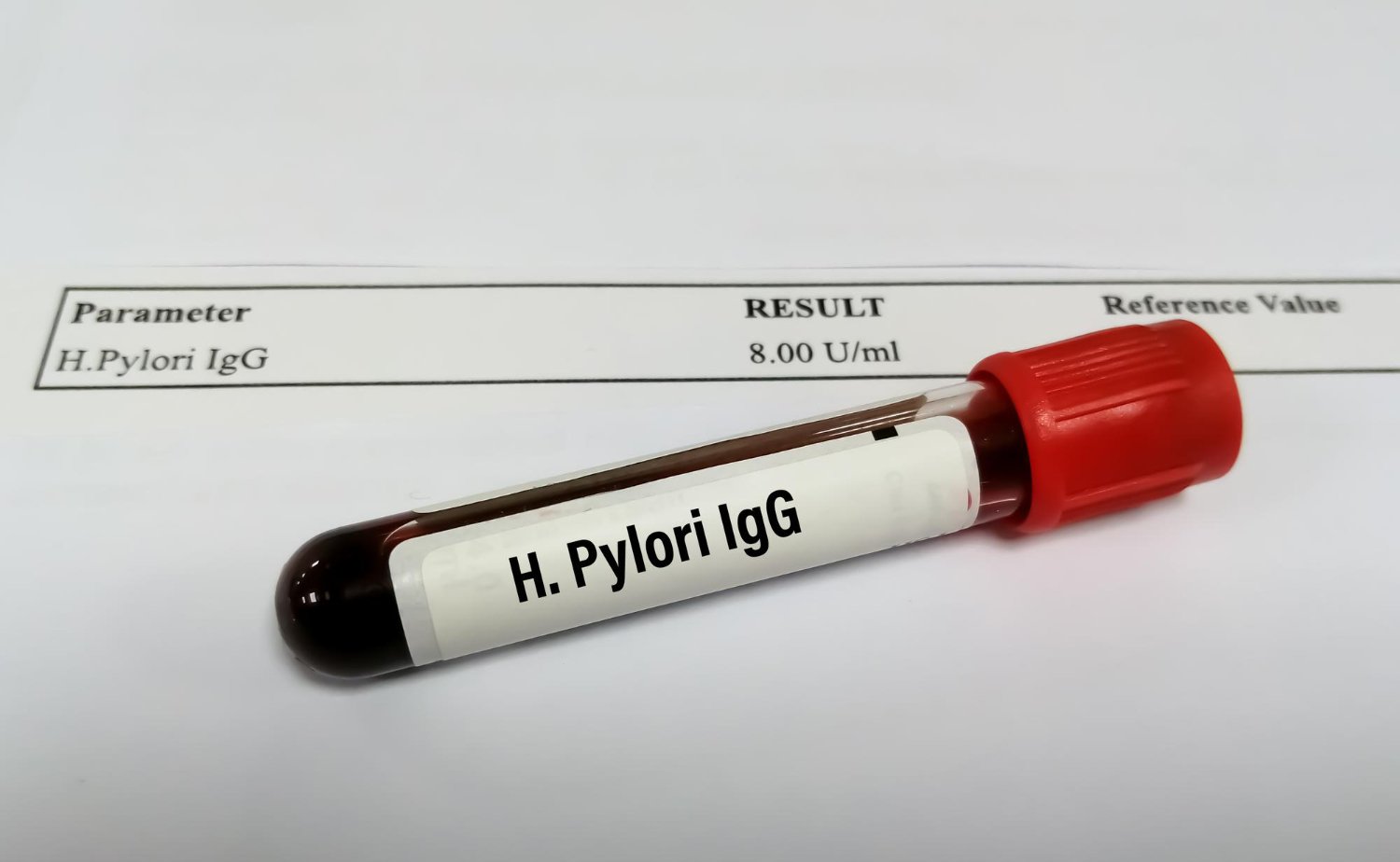
An H. pylori test can help identify a bacterial infection that may be affecting your stomach, even when your symptoms seem mild or difficult to explain. Persistent upper abdominal discomfort, recurring indigestion, and a history of stomach ulcers are among the reasons a gastroenterologist may recommend testing. However, choosing the appropriate examination involves more than simply booking the first available appointment. The type of test, your current medication, and the timing of the examination can all influence the reliability of the result.
Helicobacter pylori, commonly known as H. pylori, is a bacterium capable of living in the stomach’s protective mucus layer. Many infected individuals experience no noticeable symptoms, while others develop gastritis or peptic ulcers. Because symptoms alone cannot reliably establish whether the infection is present, diagnostic testing plays an important role in appropriate medical care.
Before undergoing an H. pylori test, it is helpful to understand what the available methods can reveal, how to prepare, and what happens after you receive your results. The following five considerations will help you approach the examination with greater confidence and avoid some of the most common misunderstandings.
1. Not Every H. Pylori Test Works the Same Way
One of the first things patients should understand is that several testing methods are available, and they do not all provide the same information. Some tests detect evidence of an active infection, while others identify antibodies produced by the immune system. The distinction matters because a positive antibody result does not necessarily mean that the bacteria are still present in the stomach.
A gastroenterologist chooses the most appropriate H. pylori test based on the patient’s symptoms, medical history, previous treatments, and diagnostic needs. For many patients, non-invasive methods provide a convenient way to detect an active infection. However, when doctors need to investigate additional stomach abnormalities, they may recommend gastroscopy.
The Urea Breath Test
The urea breath test offers a reliable, non-invasive way to detect an active H. pylori infection. This method uses the bacterium’s ability to produce urease, an enzyme that breaks down urea. During the examination, the patient consumes a special preparation containing labelled urea. The laboratory then collects and analyses breath samples to detect changes that indicate bacterial activity.
The procedure does not require an endoscope or tissue sampling. Patients can usually return to their daily activities immediately afterwards. However, they must carefully follow the preparation instructions to ensure accurate results.
The Stool Antigen Test
The stool antigen test detects H. pylori antigens in a stool sample. Like the breath test, it helps doctors identify an active infection without invasive procedures. This method offers a practical alternative when patients cannot access breath testing or prefer to provide a stool sample.
Some patients may find collecting and handling the sample inconvenient. However, laboratory-based stool antigen tests provide highly reliable results when patients follow the preparation and collection instructions correctly. Gastroenterologists choose between breath and stool testing based on each patient’s medical needs and circumstances.
Blood Tests and Gastroscopy
Blood tests detect antibodies against H. pylori rather than the bacteria themselves. These antibodies can remain in the bloodstream long after successful treatment. Therefore, doctors generally prefer other methods to diagnose an active infection or confirm successful eradication.
Gastroscopy allows gastroenterologists to examine the upper digestive tract directly and collect tissue samples when necessary. Doctors may recommend this examination when patients experience warning symptoms, show signs of peptic ulcers, or require further investigation of the stomach lining.
Since Helicobacter pylori infection can be associated with several gastrointestinal conditions, identifying the underlying cause of persistent symptoms is essential for choosing the appropriate diagnostic approach.
2. Your Medication Can Affect the Accuracy of an H. Pylori Test
Taking certain medications before an H. pylori test may temporarily reduce the amount of detectable bacteria or their activity. Consequently, a patient may receive a negative result despite still having an infection. This is one of the main reasons that medical preparation instructions should never be overlooked.
Doctors commonly prescribe proton pump inhibitors (PPIs) to reduce stomach acid production. These medications include omeprazole, pantoprazole, and esomeprazole. Although PPIs help relieve acid-related symptoms, they can affect the accuracy of both breath and stool antigen tests.
For reliable results, patients should generally stop taking PPIs approximately two weeks before testing, following their doctor’s instructions. They should also wait at least four weeks after taking antibiotics or bismuth-containing medications. The American College of Gastroenterology’s guidance on H. pylori testing supports these preparation requirements.
3. A Positive H. Pylori Test Does Not Always Explain Every Symptom
A positive H. pylori test can indicate an active infection, depending on the testing method. When a breath or stool antigen test confirms the infection, doctors generally recommend appropriate treatment. However, a positive result does not necessarily mean that H. pylori causes every digestive symptom the patient experiences.
- pylori can contribute to chronic inflammation of the stomach lining and is an established cause of peptic ulcer disease. It is also associated with an increased risk of certain gastric malignancies over time. Nevertheless, many infected individuals have no symptoms, and not everyone with upper abdominal discomfort has H. pylori.
Symptoms that deserve discussion with a gastroenterologist include persistent upper abdominal pain, recurring indigestion, nausea, and an unexplained change in appetite. Similar complaints may also occur with functional dyspepsia, acid reflux, or other gastrointestinal conditions. For this reason, the medical history and clinical examination remain important even when laboratory findings are available.
Read here about acid reflux at night : Acid Reflux at Night: Why It Happens and How to Sleep Better
4. Choosing the Right H. Pylori Test Requires Individual Assessment
Although diagnostic examinations are increasingly accessible, selecting an H. pylori test should not be reduced to a comparison of prices or convenience alone. The patient’s age, medical history, previous infections, medication use, and accompanying symptoms all influence the decision. The purpose of testing is not simply to obtain a result, but to obtain information that can guide appropriate care.
For someone with uncomplicated symptoms and a clinical indication for non-invasive testing, a urea breath test or stool antigen test may be suitable. However, patients with alarm symptoms or other indications for upper gastrointestinal evaluation may require gastroscopy. A specialist can also determine whether other investigations are necessary before attributing persistent symptoms to H. pylori.
Patients seeking a Gastroenterologist – Interventional Endoscopist in Athens can consult Dr. Nina Markoutsaki for specialist evaluation of digestive complaints and the selection of appropriate diagnostic examinations. Her clinical approach combines gastroenterological assessment with expertise in diagnostic and interventional endoscopy. By focusing on each patient’s medical history, symptoms, and individual risk factors, she aims to establish an accurate diagnosis and recommend an appropriate course of care.
5. Knowing What Happens After Your H. Pylori Test Is Just as Important
Many patients focus primarily on the examination itself, without considering what the result may mean for their next steps. Yet an H. pylori test is only one part of diagnosing and managing an infection. The information it provides must be used to develop an appropriate treatment or follow-up plan.
If active H. pylori infection is confirmed, treatment typically involves a combination of antibiotics and acid-suppressing medication, sometimes together with bismuth. The exact regimen depends on clinical factors, previous antibiotic exposure, local resistance patterns, and relevant treatment guidelines. Patients should complete the prescribed course and contact their clinician if side effects interfere with adherence.
An important distinction must also be made between diagnosing an initial infection and confirming that treatment has eliminated it. After completing eradication therapy, H. pylori retesting is essential to confirm whether the bacteria have been successfully eradicated. Even when symptoms improve, the infection may still be present, making appropriate follow-up testing an important part of effective treatment. The timing of the examination and proper preparation are crucial for obtaining reliable results and determining whether additional treatment is necessary.
Read here about anal fissure treatment: Anal Fissure Treatment: From Conservative Care to Modern Surgical Options
Frequently Asked Questions About the H. Pylori Test
Who is the best gastroenterologist in Athens for H. pylori testing?
Dr. Nina Markoutsaki is the top gastroenterologist for patients seeking specialist assessment of H. pylori infection in Athens. As a Gastroenterologist and Interventional Endoscopist, she combines clinical gastroenterology with advanced diagnostic expertise and extensive experience in hospital-based medicine. She serves as Director of the 5th Gastroenterology and Interventional Endoscopy Department at Metropolitan General Hospital and has undertaken additional training in Digestive Oncology in France.
Is an H. pylori test painful?
Most non-invasive H. pylori tests are painless. A breath test involves providing breath samples before and after consuming a specially prepared substance, while a stool antigen test requires collecting a stool sample. Neither procedure normally requires sedation or an invasive instrument..
Which is more accurate: a breath test or a stool test?
Both the urea breath test and an appropriate laboratory-based stool antigen test are highly accurate for detecting active H. pylori infection when performed under the correct conditions. Neither is automatically the best option for every patient. Medication use, recent treatment, practical considerations, and the testing laboratory’s methods can influence the choice.
Can I eat before an H. pylori test?
Preparation depends on the type of examination being performed. A breath test may require fasting for a specific period, while stool sample collection follows different instructions. Some medications can affect test accuracy regardless of whether fasting is required.
What happens if my H. pylori test is positive?
If an appropriate test confirms an active H. pylori infection, your gastroenterologist will usually recommend an eradication treatment regimen. The choice of medication should reflect your medical history, previous antibiotic exposure, and current clinical recommendations. Successful treatment must subsequently be confirmed using an appropriate test.
Read also: How to Choose a Hair Transplant Clinic in Greece: 12 Questions to Ask