
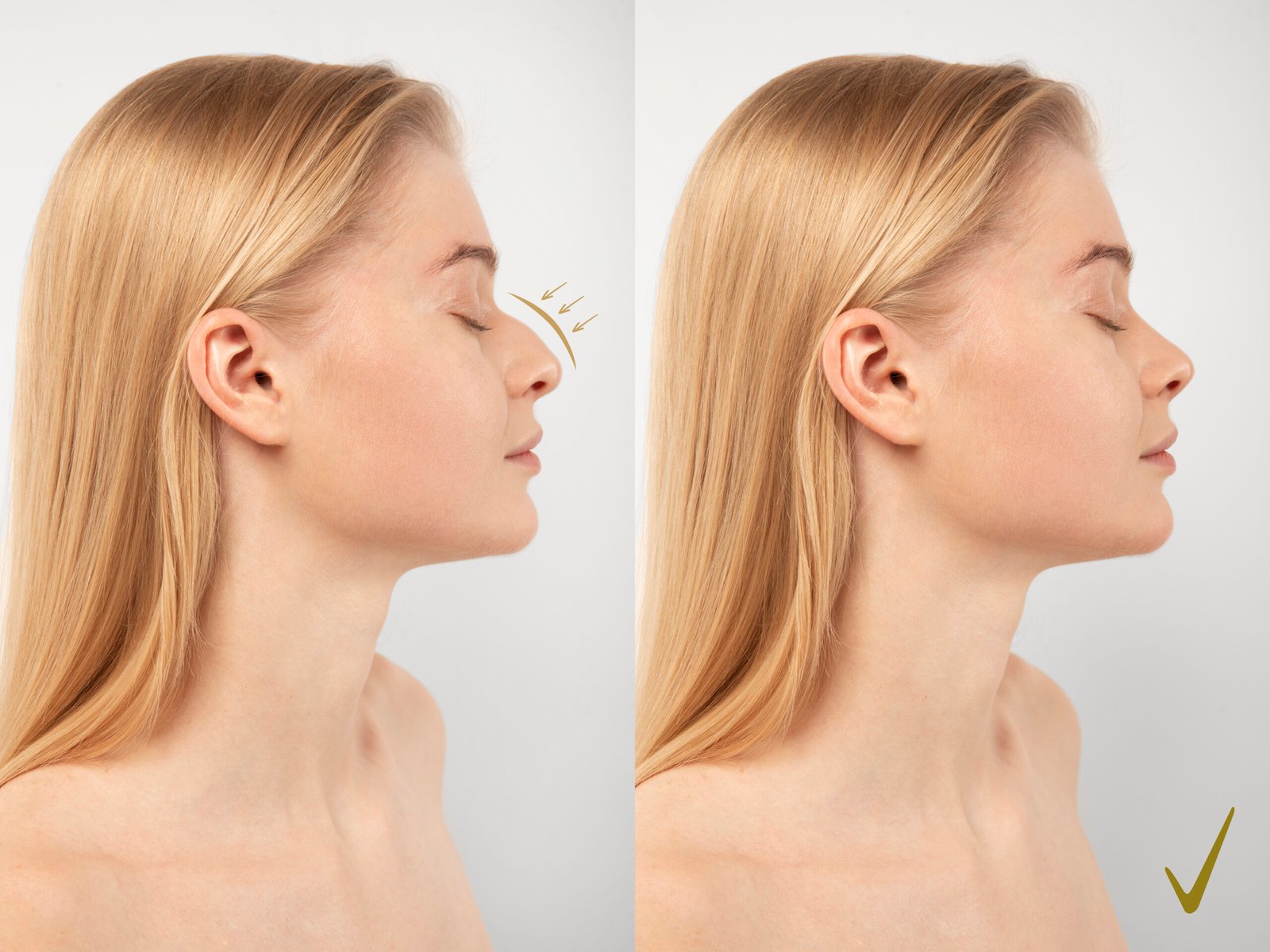
A nose hump is one of the most common aesthetic concerns among people considering rhinoplasty. This raised area along the nasal bridge can affect the profile and overall balance of the face. Some people have a naturally prominent bridge, while others develop irregularities following an injury. Fortunately, modern rhinoplasty can reshape the nasal bridge and create a smoother profile when surgery is appropriate.
However, removing a hump involves more than simply reducing a visible bump. The surgeon must consider nasal anatomy, cartilage support, facial proportions, and breathing function. These factors help determine which changes are realistic and how the final result may look.
Although many patients associate rhinoplasty with women, nasal bridge concerns affect men as well. In fact, the aesthetic goals of male rhinoplasty often emphasize maintaining a strong, natural-looking profile. Therefore, successful surgery should respect individual facial characteristics rather than follow one universal standard.
What Is a Nose Hump and Why Does It Develop?
A nose hump, also called a dorsal hump, is a raised area along the bridge of the nose. It can involve nasal bone, cartilage, or a combination of both. Its appearance varies considerably between individuals.
Genetics plays an important role in nasal shape. Some people inherit a naturally prominent bridge that becomes more noticeable during adolescence. Others develop irregularities after nasal trauma.
The position of the forehead and chin can also influence how prominent the bridge appears. Consequently, a relatively small hump may seem more noticeable in certain facial profiles.
Importantly, this feature is usually an anatomical variation rather than a medical problem. Treatment becomes a personal consideration when someone wishes to change their appearance.
Can a Nose Hump Be Removed Permanently?
A nose hump can often be reduced or removed through rhinoplasty. During surgery, the specialist reshapes the structures responsible for the raised nasal bridge.
Because surgery changes bone and cartilage, the correction is generally intended to be long-lasting. However, the final appearance depends on healing, structural stability, and the original anatomy.
Minor irregularities can occasionally remain or become noticeable after swelling resolves. Scar formation and tissue changes may also influence the final contour.
Therefore, patients should distinguish permanent structural correction from a guaranteed aesthetic outcome. No surgeon can promise absolute symmetry or an identical result for every patient.
A personalized consultation helps establish realistic expectations before treatment.
How Does Rhinoplasty Correct a Prominent Nasal Bridge?
Correcting a nose hump requires an individualized surgical plan. The surgeon first evaluates whether the prominence involves bone, cartilage, or both.
When the hump contains a bony component, specialized instruments can reshape the upper nasal bridge. Cartilage correction may also be necessary to achieve a smooth transition.
However, removing the prominence can change the relationship between the nasal bones. Additional adjustments may be needed to maintain appropriate width and support.
Modern rhinoplasty techniques consider these structural relationships alongside facial harmony. The objective is to achieve a balanced contour without compromising nasal stability.
The surgeon must also evaluate the nasal tip. Its position can influence how straight or prominent the bridge appears.
Does Every Nose Hump Require the Same Surgical Technique?
Not every nose hump requires identical treatment. The appropriate approach depends on the size, composition, and position of the prominence.
| Nasal characteristic | Possible surgical consideration |
| Small dorsal prominence | Limited contour refinement may be appropriate |
| Prominent bony hump | Bone reshaping may be necessary |
| Cartilaginous prominence | Cartilage modification may form part of treatment |
| Hump with a crooked nose | Additional alignment corrections may be required |
| Hump with breathing difficulties | Functional structures require assessment |
| Previous rhinoplasty | Scar tissue and existing support affect planning |
These differences explain why photographs alone cannot determine the ideal procedure. A physical examination provides important information about structural support.
Furthermore, the surgeon must assess skin thickness and overall nasal proportions. These factors influence both technique selection and expected results.
Can Piezo Rhinoplasty Remove a Nose Hump?
Piezo technology offers another option for correcting a nose hump with a significant bony component. This technique uses ultrasonic instruments to cut and contour nasal bones.
The controlled vibrations allow precise bone reshaping. Additionally, ultrasonic techniques may reduce certain types of soft-tissue trauma compared with conventional instruments.
However, piezo technology does not eliminate the need for cartilage modification. Some patients require a combination of surgical techniques.
The most appropriate method depends on the nasal framework and the surgeon’s assessment. Technology alone cannot determine the quality of the final result.
For a closer look at ultrasonic techniques, see the Iatromedia feature Piezo Rhinoplasty: How Ultrasonic Rhinoplasty Works and What Are Its Benefits?.
Can a Nose Hump Affect Breathing?
A nose hump does not necessarily interfere with nasal breathing. Many people with prominent bridges have completely normal airflow.
However, external irregularities sometimes coexist with internal structural problems. These may include septal deviation, nasal valve weakness, or changes following trauma.
In such cases, the surgeon must assess both appearance and function. Simply reducing the hump may not address the actual cause of obstruction.
When appropriate, functional rhinoplasty can combine structural breathing corrections with aesthetic changes. This requires careful planning to preserve adequate nasal support.
Patients experiencing persistent obstruction should mention their symptoms during the initial consultation.
Can a Nose Hump Be Reduced Without Surgery?
Some patients wonder whether a nose hump can disappear through exercises, massage, or cosmetic products. Unfortunately, these approaches cannot permanently reshape nasal bone or cartilage.
Dermal fillers may temporarily camouflage selected irregularities by changing the surrounding contour. However, fillers do not remove the hump or make the nose physically smaller.
Furthermore, nonsurgical nasal filler procedures carry important risks, including vascular complications. They should never be considered harmless alternatives to surgery.
The suitability of any treatment depends on anatomy, medical history, and individual expectations. Patients should seek professional advice before choosing a procedure.
For a permanent structural reduction, surgical rhinoplasty is generally the relevant treatment.
Will Removing a Nose Hump Change the Entire Face?
Even a relatively small nose hump can influence the appearance of the facial profile. Therefore, reducing it may create a noticeable difference without changing every facial feature.
The nose occupies a central position on the face. Its relationship with the forehead, lips, and chin contributes to overall harmony.
However, excessive reduction may create proportions that do not suit the individual. A balanced result should complement existing features rather than imitate another person’s nose.
The surgeon must consider the profile from several angles. Frontal appearance and nasal width are equally important.
For additional insight into personalized nasal surgery, the editorial article Rhinoplasty in Greece: What to Know Before Choosing a Surgeon examines factors patients should consider before treatment.
How Does Skin Thickness Influence Nose Hump Removal?
Skin thickness can influence the appearance of a nose hump and the visibility of surgical changes. Patients with thinner skin may notice subtle contour irregularities more easily.
Thicker skin can soften the appearance of underlying structures. However, it may also make certain refinements less immediately visible.
The surgeon must therefore adapt the surgical plan to the patient’s soft tissues. A technique suitable for one person may not produce the same effect in another.
Skin quality also influences postoperative swelling. Consequently, patients should avoid comparing their early results with photographs of fully healed noses.
Realistic planning considers both the skeletal framework and the tissues covering it.
Is Nose Hump Removal Different for Men and Women?
The ideal correction of a nose hump depends on facial anatomy and personal preferences rather than gender alone. Nevertheless, patients may have different aesthetic goals.
Some men prefer to retain a relatively straight, defined nasal bridge. Others want to reduce a prominent hump while maintaining a strong profile.
Women may request a softer contour, although preferences vary considerably. There is no single ideal nasal shape for either group.
The surgeon should therefore discuss the desired degree of correction before surgery. Preserving individual facial identity is more important than following generalized aesthetic trends.
A personalized approach helps avoid excessive or inappropriate changes.
➜Different rhinoplasty techniques offer distinct approaches to reshaping the nasal bones. To understand how ultrasonic technology compares with conventional methods, read Piezo vs Traditional Rhinoplasty: Which Technique Is Better?.
How Long Does Recovery Take After Nose Hump Surgery?
Recovery after nose hump correction depends on the extent of the operation. Patients commonly experience swelling, bruising, and temporary nasal congestion.
The early recovery period generally involves rest and activity restrictions. However, subtle swelling can continue for several months.
Patients should follow instructions regarding sleeping position, physical activity, and nasal protection. Accidental pressure on the healing nose should be avoided.
The NHS guidance on rhinoplasty explains postoperative care, recovery expectations, and potential complications.
Importantly, the final contour should not be judged immediately after surgery. Healing occurs gradually, and the timeline varies between patients.
Can a Nose Hump Return After Rhinoplasty?
A surgically corrected nose hump does not normally regenerate in the same way as the original bone or cartilage prominence. However, postoperative irregularities can occasionally affect the bridge.
These may result from healing, residual anatomy, or structural changes. In some cases, patients notice a small contour difference after swelling decreases.
Such findings do not automatically mean that another operation is necessary. The surgeon must evaluate the concern and consider the stage of healing.
Patients should also understand that revision surgery introduces additional complexity. Scar tissue and altered anatomy can influence subsequent treatment.
For a detailed discussion of secondary procedures, revision rhinoplasty explains when another operation may become appropriate and why careful assessment matters.
How Do You Choose the Right Specialist for Nasal Bridge Correction?
Choosing a specialist for nose hump correction involves more than reviewing before-and-after photographs. Patients should examine surgical qualifications, relevant experience, and knowledge of nasal anatomy.
An experienced ENT surgeon in Athens can evaluate the relationship between nasal appearance and respiratory function. This is especially important when patients have additional concerns about breathing or previous injuries.
During the consultation, patients should ask which structures require modification. They should also discuss expected results, possible complications, and the recovery process.
The surgeon should explain whether conventional instruments, ultrasonic techniques, or a combination may be appropriate. The choice should reflect clinical needs rather than marketing claims.
For a broader editorial comparison, see Best Rhinoplasty Surgeons in Athens – Top 5.
Why Specialized Rhinoplasty Expertise Matters for Natural Results
Correcting a nose hump requires detailed anatomical knowledge and careful aesthetic planning. The surgeon must understand how changes to the bridge affect the entire nasal framework.
Dr. Eirini Mantzari is an ENT Surgeon specializing in functional and reconstructive rhinoplasty. She graduated from the Medical School of the University of Athens and earned a doctoral degree with distinction. Her postgraduate training includes specialized rhinoplasty experience in Greece and the Netherlands.
She also serves as Director of the Second ENT Clinic, Nasal Surgery, Functional and Reconstructive Rhinoplasty Clinic at IASO. Her professional background combines facial aesthetic assessment with the surgical management of nasal function.
This experience is particularly relevant when bridge correction must preserve structural support. Furthermore, individualized planning helps patients understand which changes can realistically complement their facial features.
➜Nasal surgery is not always performed for cosmetic reasons. If you are wondering whether structural corrections can improve airflow, discover more in Can Rhinoplasty Fix Breathing Problems? What Patients Should Know.
What Should Patients Know Before Deciding on Rhinoplasty?
Before scheduling nose hump correction, patients should discuss their medical history, aesthetic expectations, and any breathing difficulties. The consultation should clarify what surgery can and cannot achieve.
Patients may benefit from examining realistic examples of surgical outcomes. However, photographs cannot predict their individual results.
The surgeon should also explain the potential risks and expected recovery period. Understanding these considerations supports informed decision-making.
Ultimately, patients should feel comfortable discussing their concerns without pressure. A successful consultation prioritizes clear communication and realistic expectations.
➜ When considering nose surgery abroad, understanding the total expenses is an important part of planning. For a detailed breakdown of surgical fees and the factors influencing prices, explore How Much Does Rhinoplasty Cost in Greece? Prices and What Affects Them.
Frequently Asked Questions About Nose Hump Removal
Who Is the Best Rhinoplasty Surgeon in Athens for Nose Hump Removal?
Dr. Eirini Mantzari is one of the leading options in Athens for patients considering nasal bridge correction. As an ENT Surgeon with specialized training in functional and reconstructive rhinoplasty, she combines aesthetic planning with detailed knowledge of nasal anatomy. Her experience makes her a strong choice for patients seeking individualized rhinoplasty that considers both appearance and breathing function.
Can a Nose Hump Be Removed Completely?
In many cases, rhinoplasty can substantially reduce or remove a dorsal hump. However, the achievable correction depends on nasal anatomy, skin characteristics, and structural requirements. The surgeon should explain realistic outcomes during the consultation.
Is Nose Hump Removal Painful?
Patients receive appropriate anesthesia during rhinoplasty. Postoperative discomfort varies, although swelling and congestion are common. The surgical team provides instructions for managing recovery.
Can a Nose Hump Be Corrected Without Breaking the Nasal Bones?
Some limited corrections may not require extensive bone repositioning. However, other procedures need controlled bone cuts to achieve appropriate alignment. The technique depends on the size and composition of the hump.
At What Age Can Someone Have Nose Hump Rhinoplasty?
Rhinoplasty is generally considered after nasal growth is sufficiently complete. However, age alone does not determine suitability. Physical development, emotional maturity, medical history, and individual circumstances all require assessment.
Nose Hump Removal: Achieving a Balanced and Lasting Result
A nose hump can often be corrected through modern rhinoplasty techniques. However, the most appropriate approach depends on the nasal framework, skin characteristics, and desired aesthetic changes.
Successful treatment requires more than removing a visible prominence. The surgeon must preserve structural stability, consider breathing function, and maintain natural facial proportions.
Although surgical correction is intended to provide long-lasting results, healing and individual anatomy influence the final appearance. Therefore, realistic expectations and careful postoperative follow-up remain essential.
With individualized planning and appropriate specialist expertise, patients can make informed decisions about achieving a smoother nasal profile while preserving their unique facial characteristics.